
Verifiable Credentials · Training Since 1986
Ranks &
Credentials
A complete record of Chris Martell’s martial arts ranks, instructor certifications, teachers, and academic credentials. Every entry names the awarding teacher and, where one exists, the recognized organization — so you can check any of it.
1986
Training Since Age 6
4
Black Belts
8
Arts Credentialed to Teach
20+
Arts Studied
MS.Ed
Purdue University
Summary
The short version, in plain language.
Chris Martell holds black belt rank in four martial arts: Kenpo Karate (4th degree, awarded 2001 under Professor Lee Lowery), Modern Arnis (Lakan, awarded 2001 under founder and Grandmaster Remy Presas), Budoshin Ju-Jitsu (awarded 2011 under Professor George Kirby), and Brazilian Jiu-Jitsu (awarded 2012 under Professor Roy Harris, ten years after restarting the art from white belt under him in 2002). He holds instructor-level credentials in eight martial arts in total, is a certified instructor and G1 under the International Krav Maga Federation (2023), and holds a Master of Science in Education in Curriculum & Instruction from Purdue University (2019). He has trained in more than twenty martial arts since 1986, and has taught since 1997.
Arts Chris has taught
Each with a named teacher and an awarding body. Where MSDC runs a full program in the art, the name links to that program.
| Art | Rank or certification | Awarded | Teacher & organization |
|---|---|---|---|
| Kenpo Karate | 4th Degree Black Belt | 2001 Began 1988 · first black belt at age 16 | Professor Lee Lowery Middletown Kenpo Karate Studio, Middletown, CT |
| Modern Arnis | Lakan (Black Belt) | 2001 Began 1991 · 10 years | Professor Remy Presas — founder & Grandmaster of Modern Arnis Professor Lee Lowery · Master Brian Zawilinski International Modern Arnis Federation |
| Brazilian Jiu-Jitsu | Black Belt | 2012 Began 1997; restarted from white belt under Mr. Harris in 2002 · 10 years | Professor Roy Harris — 7th degree black belt Harris International |
| Budoshin Ju-Jitsu | Black Belt | 2011 Began 2002 · 9 years | Professor George Kirby Budoshin Ju-Jitsu Yudanshakai |
| Krav Maga | Certified Civilian Instructor, G1 | 2023 — CIC diploma & G1 2002 — original instructor certification | 2002 — Master Rhon Mizrachi, Krav Maga Federation 2023 — International Krav Maga Federation |
| Jeet Kune Do | Level 2 Instructor | 2011 Began 2003 · 8 years | Professor Roy Harris Harris International |
| Gi & No-Gi Grappling | Associate Level Instructor | 2006 Began 2002 · 4 years | Professor Roy Harris Harris International |
| Filipino Martial Arts | Level 1 Instructor | 2011 Began 2003 · 8 years | Professor Roy Harris — Harris International Inosanto Blend of Kali · Kalis Ilustrisimo (direct study with Mang Romy Macapagal) |
| Boxe Française Savate | Green Glove | 2008 Began 2003 · 5 years | Moniteur Armando Basulto · Initiateur Rolando Garcia Basulto Academy of Defense Professor Roy Harris — Harris International |
Read the gap between the two dates
- Brazilian Jiu-Jitsu: began 1997. Restarted from white belt under Professor Roy Harris in 2002. Black belt 2012. The middle step is the one worth noticing. Five years in, he set aside the progress he’d already made and began the art again from scratch under a stricter standard — then spent ten more years earning the belt. Nobody does that to get ranked faster. It is the single most informative line on this page.
- Modern Arnis took ten years. Budoshin Ju-Jitsu nine. Jeet Kune Do and Filipino Martial Arts eight each. Boxe Française Savate five. Nothing here was quick.
- The Modern Arnis Lakan was awarded in 2001 — the final year of Grandmaster Remy Presas’s life. Rank awarded directly by the founder of the art is a closed set now.
- Both dates are published for every credential because either one alone is misleading. “Training since 1997” overstates; “black belt 2012” understates. Together they tell you what actually happened.
- If a school won’t tell you when a rank was awarded and by whom, that is itself the answer to your question.
Context
What these ranks actually mean.
A list of certificates only helps if you know how to read it. Here’s why four of these are unusual — and why any of it should matter to you as a prospective student or event organizer.
Modern Arnis — Lakan
Ranked by the founder himself
Remy Presas created Modern Arnis and is the reason the art exists outside the Philippines. Chris Martell’s Lakan was awarded in 2001 — the final year of Professor Presas’s life, after ten years of training under him and his senior instructors in New England. The population of people holding rank awarded directly by the founder is now a closed set. This is not a credential that can be obtained today at any price.
Brazilian Jiu-Jitsu — Black Belt
Under the “teacher’s teacher”
Professor Roy Harris is a 7th degree BJJ black belt known throughout the art for the quality of his instruction rather than just his competition record — other instructors go to him to learn how to teach. Rank in this lineage is famously slow and famously respected. Chris Martell had already trained Brazilian Jiu-Jitsu for years when he chose to begin again from white belt under Harris in 2002 — and it took ten more years to reach black belt, in 2012. And it travels: walk into a gym in another state and it will be understood.
Krav Maga — IKMF
The original federation
Anyone can call their program “Krav Maga,” and the quality of training can be all over the place. The International Krav Maga Federation is the original global organization, created by the founder of Krav Maga himself to spread the system worldwide. It is the gold standard, certification is externally examined, and it is verifiable with the federation.
MS.Ed — Purdue University
The one almost nobody in this field has
A graduate degree in Curriculum & Instruction with a specialization in Learning Design and Technology is a formal qualification in how to make people learn things. In an industry where teaching ability is usually assumed to follow from fighting ability, this is the credential that most directly predicts whether you’ll actually get better.
Why we publish all of this
- Self-defense is an unregulated field. There is no licensing board, no required disclosure, and no penalty for overstating a credential — which means the burden of verification falls entirely on you.
- Our answer is radical specificity: every rank on this page names a teacher, an organization, and a date. Vague claims (“decades of experience,” “master instructor,” “combat-proven”) are the tell. Checkable ones are the alternative.
- If you’re an event organizer, a university risk office, or a parent doing due diligence: ask us for references. We’ll give you names.
Going to the source
Forty years of finding the best people, and training with them.
The tables above are the paperwork. This is what produced them: four decades of seeking out the person at the top of each discipline and putting in the hours directly under them — often for years, in some cases until they were gone.
There is a shortcut available in the martial arts, and a lot of people take it. You learn an art secondhand from someone who learned it secondhand, add it to your banner, and nobody checks. The material degrades a little with each pass, and by the third generation the reasoning behind it is gone — leaving a set of movements nobody can explain.
The alternative is expensive and slow: you go to the source. You find the person who actually developed the material or carries it directly, you travel to them, you train under them repeatedly over years, and you keep going back long after you have the certificate. That is the entire reason this list of teachers reads the way it does.
Grandmaster Remy Presas created Modern Arnis; Chris trained under him until Professor Presas’s death in 2001. Professor Roy Harris is the instructor other Brazilian Jiu-Jitsu instructors go to in order to learn how to teach; that relationship has run since 2002 and continues today. Mang Romy Macapagal is the archivist of Kalis Ilustrisimo, a blade system rarely taught in the United States at all. Professor George Kirby has led Budoshin Ju-Jitsu for over half a century.
None of these were weekend certifications. They were relationships, maintained across decades and, in several cases, across the country.
Why this matters to you, specifically
- You get the reasoning, not just the technique. When material comes from the person who built it, the why comes with it — and the why is what lets you adapt when a situation doesn’t match the drill.
- You get access you couldn’t easily buy. Rank awarded personally by the founder of an art is a closed set. Direct study in Kalis Ilustrisimo is rare anywhere outside the Philippines. Both are in the room during a private lesson here.
- You get comparison, not doctrine. Four separate lineages under one instructor means honest answers about where each system is strong and where it isn’t.
- And it keeps going. These aren’t historical relationships. Continued training is the reason the instruction improves year over year rather than calcifying around what worked in 2004.
On the mat with them
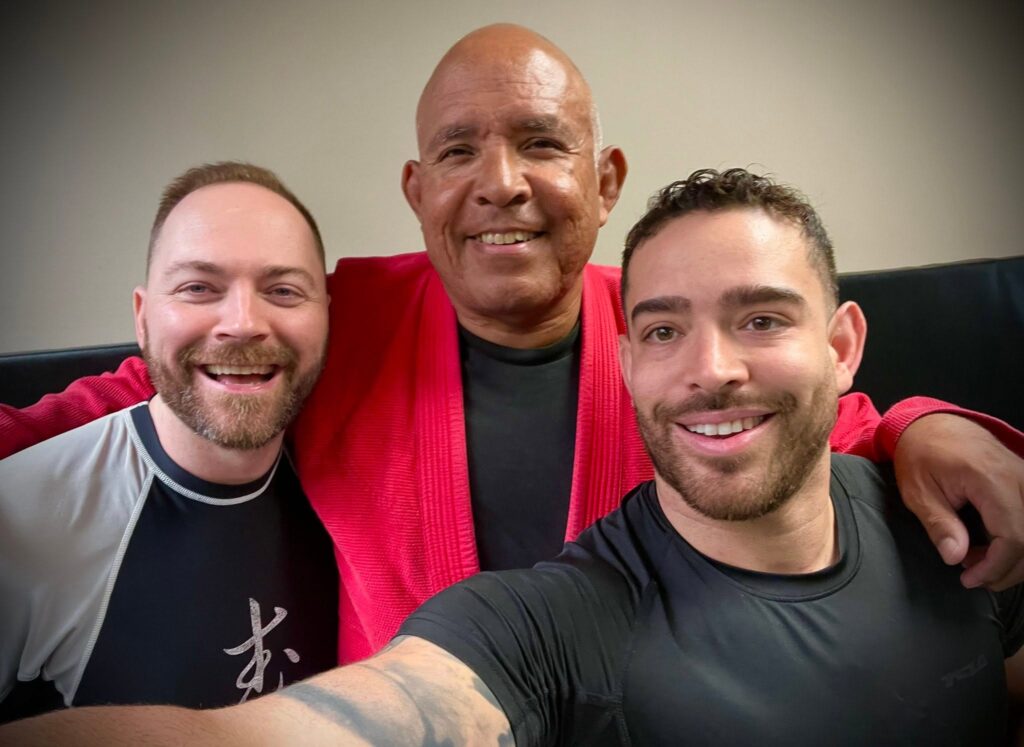
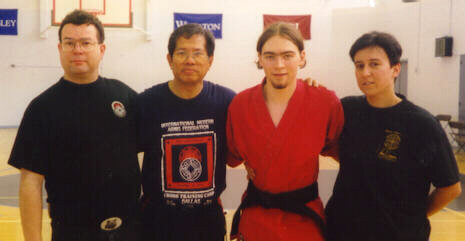
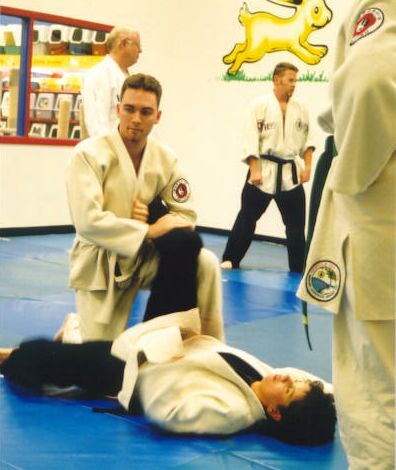
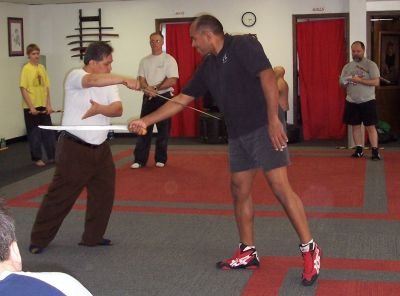
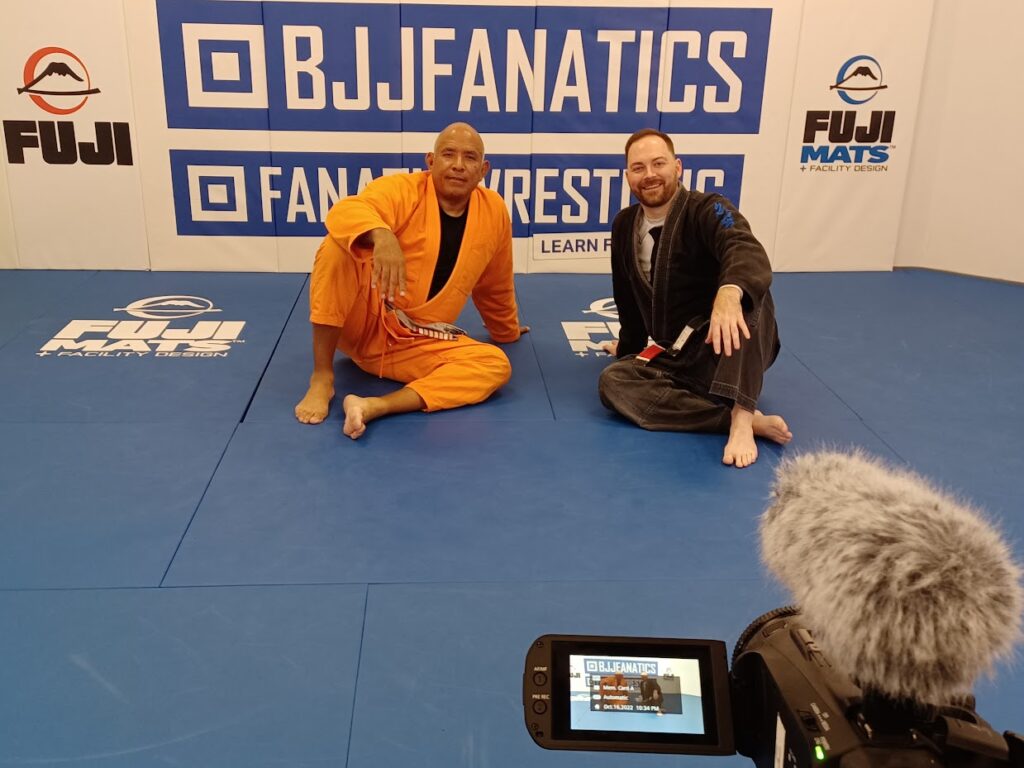
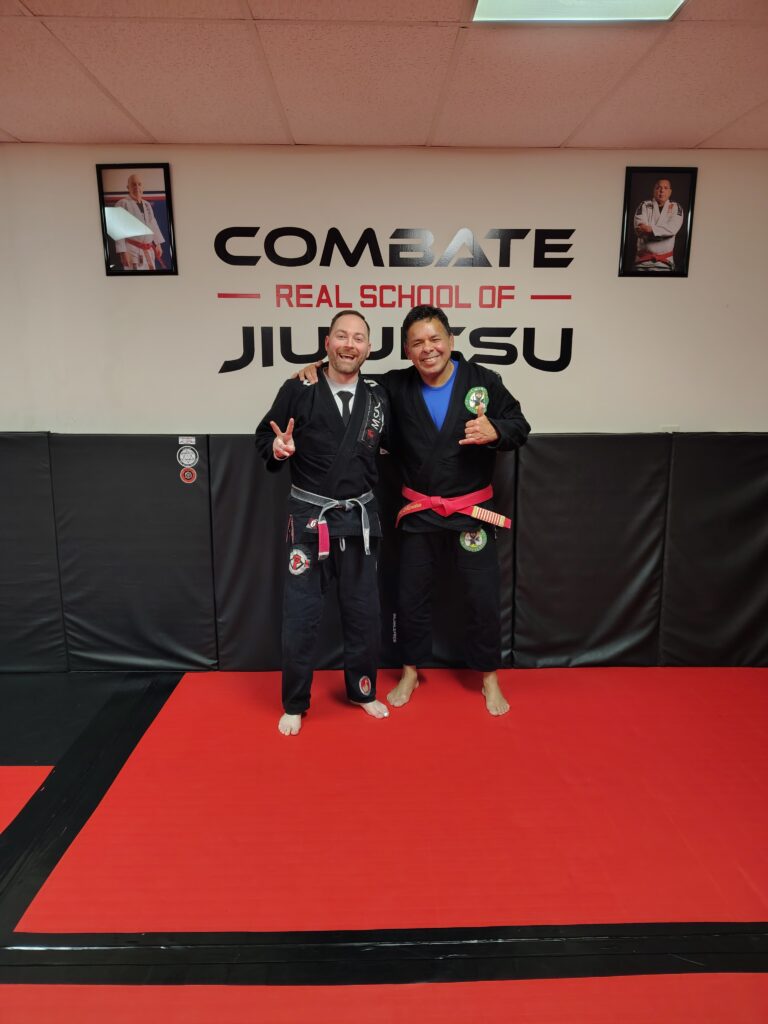
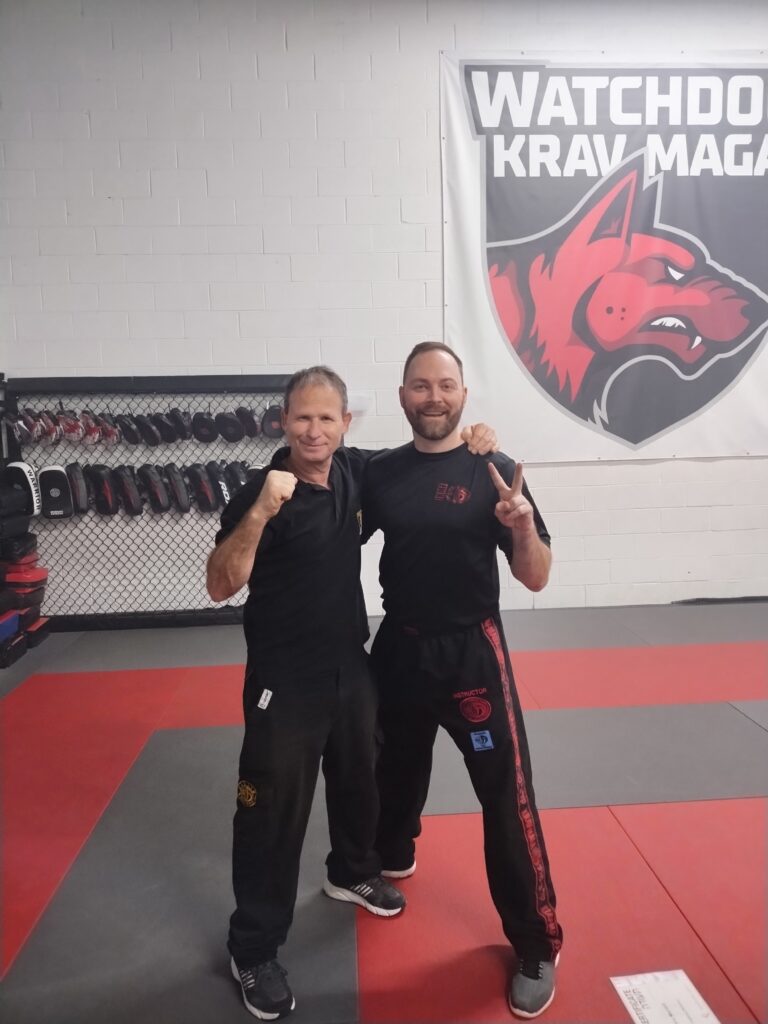
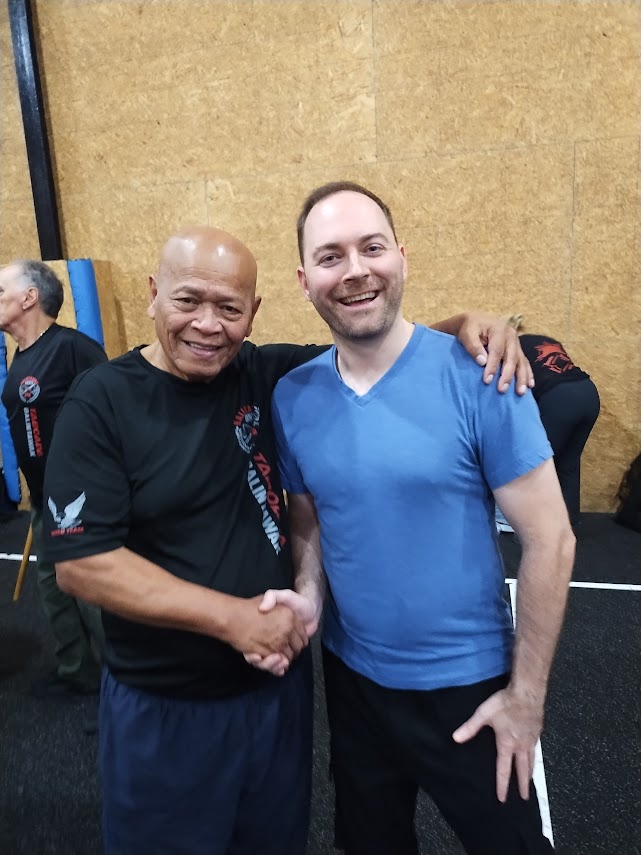
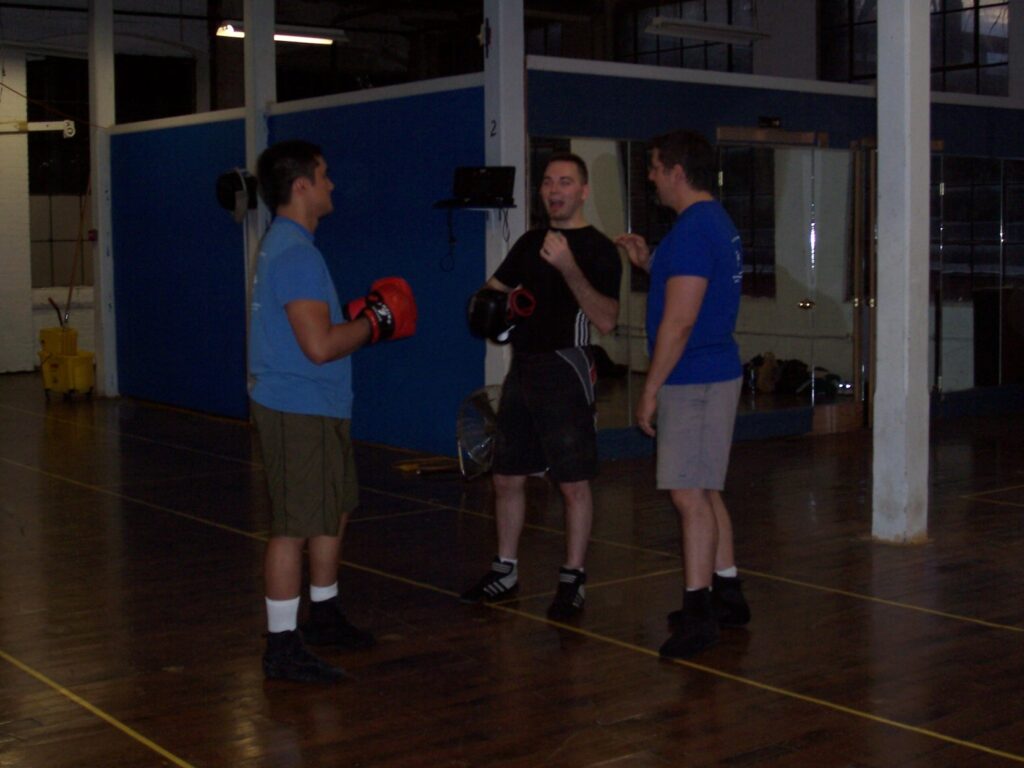
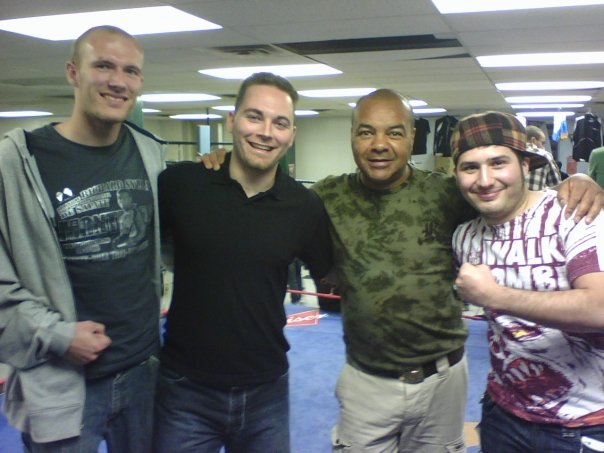
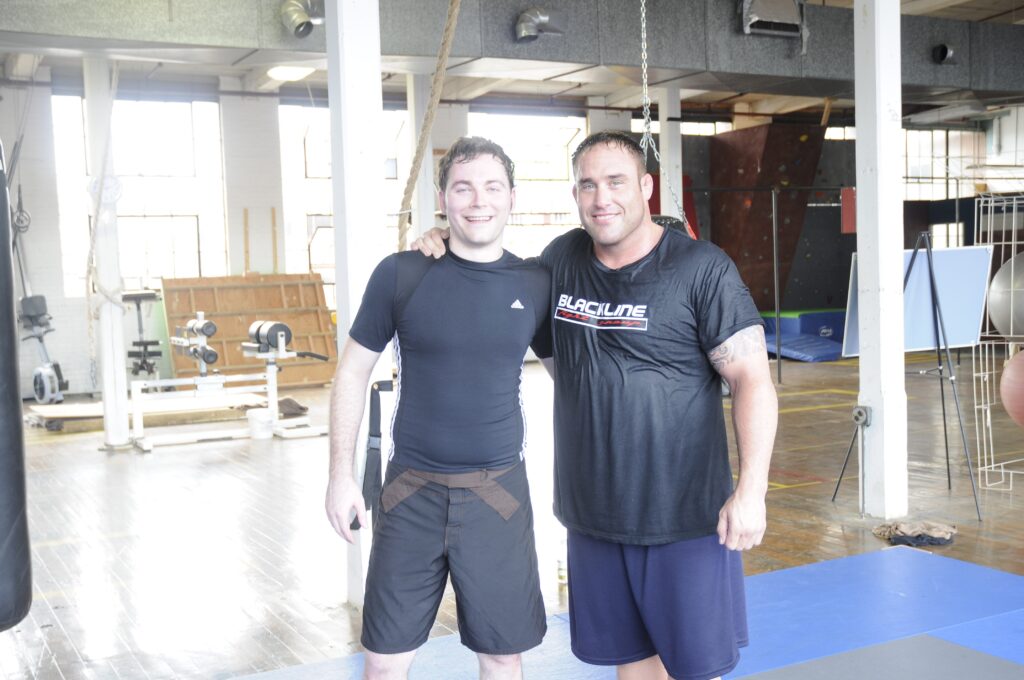
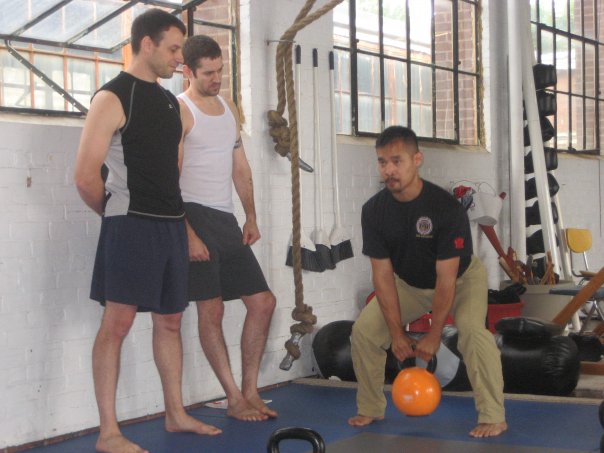
Photographs from four decades of training with the people who shaped each discipline — most of them taken at MSDC, where we’ve hosted many of these instructors for seminars since 2002.
Arts Chris has also studied
Study without teaching credentials — listed for completeness, and because breadth is the whole basis of the Jeet Kune Do program. You cannot curate a library you’ve never read.
| Art | Where studied | |
|---|---|---|
| Judo | Middletown Judo Club · Blue Dragon Judo Club — first art, beginning 1986 at age 6 | |
| Capoeira | Ginga Brasileira | |
| Aikido | Valley Aikido | |
| Kendo / Kumdo / Siljun Dobup | UMass Kendo · Kumdo Academy Sung Moo | |
| Fencing | UMass Fencing Team · ICONN Fencing | |
| Tai Chi | UMass · Arica Institute | |
| Qi Gong / Kyusho Jitsu | Kyusho International | |
| Small Circle Jujitsu | Small Circle Jujitsu International | |
| American Jiu Jitsu | UMass American Jiu Jitsu | |
| Shorter studies | Sayoc Kali · Hojo-jutsu · Shuai Jiao · Wing Chun · Sumo · and more | |
Academic & professional certifications
The credentials that are not martial arts ranks — and arguably the ones that matter most to how you’ll be taught.
| Credential | Detail | Awarding body |
|---|---|---|
| Master of Science in Education (MS.Ed) | Curriculum & Instruction — specialization in Learning Design and Technology May 2019 | Purdue University |
| Functional Movement Screen | Level 2 Certification November 2022 | Functional Movement Systems |
| Functional Capacity Screen | Certified November 2022 | Functional Movement Systems |
| Published author | Knack Self-Defense for Women Paperback, 256 pages, 400+ color photographs | Globe Pequot, 2011 — Knack: Make It Easy series ISBN 978-1-59921-956-1 · see Press & Publications |
Why the movement screening matters
Functional Movement Screen Level 2 and Functional Capacity Screen certification are the reason training here is built to develop skill without accumulating injuries. If you’re over 40, returning from an injury, or simply cannot afford to be sore for a week, this is the credential to care about — and almost no martial arts instructor has it.
Why the Purdue degree matters
Every program, private lesson, seminar, and online course at MSDC is built using formal instructional design: a defined capability, a deliberate sequence toward it, and practice structured for retention under stress. That’s the mechanism behind the promise that you leave your first lesson with a usable skill.
Some seminar & workshop clients
Chris has taught workshops and seminars for a number of public, private, and university-based groups. Each of these organizations vetted an outside instructor before putting him in front of their students or staff. Here is a partial list of the places where he has instructed:
Higher education & schools
- Wesleyan University Athletics — designed and taught their self-defense course for several years as their only non-faculty instructor
- WesWell — Wesleyan University Wellness Office
- Wesleyan Brazilian Jiu-Jitsu Club Head Coach
- UConn Krav Maga Self-Defense Club Head Coach
- Mitchell College
- Southern Connecticut State University
- Trinity College
- University of Saint Joseph
- Suffield Academy
- South Windsor High School — National Honor Society
Organizations & martial arts schools
- Community Renewal Team, Inc.
- HYPE — Hartford Young Professionals & Entrepreneurs
- International Modern Arnis Federation — featured guest instructor, Annual Modern Arnis Camp, 2011
- Middletown Kenpo Karate Studio — Middletown, CT
- Cromwell Martial Arts — Cromwell, CT
- Baran’s Kenpo Karate — Wallingford, CT
- Giroux Brothers Martial Arts — Glastonbury, CT
- Institute of Martial Arts — Wallingford, CT
- Silverback Academy — Fairfax, VA
- Lewis Brazilian Jiu-Jitsu — Naples, FL
Chris’ self-defense instruction has also made the front page of the Sunday paper (Middletown Press), the NBC Connecticut evening news, and has twice been featured on the ABC News homepage.
Credential questions
Straight answers.
What black belts does Chris Martell hold?
Four: a 4th degree black belt in Kenpo Karate, awarded 2001 under Professor Lee Lowery; a Lakan (black belt) in Modern Arnis, awarded 2001 under founder and Grandmaster Remy Presas; a black belt in Budoshin Ju-Jitsu, awarded 2011 under Professor George Kirby; and a black belt in Brazilian Jiu-Jitsu, awarded 2012 under Professor Roy Harris — ten years after restarting the art from white belt under him in 2002.
How many martial arts is Chris Martell certified to teach?
Eight: Kenpo Karate (2001), Modern Arnis (2001), gi and no-gi grappling (2006), Budoshin Ju-Jitsu (2011), Jeet Kune Do (2011), Filipino Martial Arts (2011), Brazilian Jiu-Jitsu (2012), and Krav Maga (2002, recertified under the IKMF in 2023). He has trained in more than twenty martial arts in total since 1986. MSDC runs four of these as full programs; the rest are available to private clients on request.
Is Chris Martell a certified Krav Maga instructor?
Yes. He completed Krav Maga instructor training in 2002 under Master Rhon Mizrachi of the Krav Maga Federation, and in 2023 earned a Certified Instructor Course diploma and Graduate Level 1 rank under the International Krav Maga Federation — the original global Krav Maga organization, founded by the creator of Krav Maga. See the Krav Maga program page.
What academic qualifications does Chris Martell hold?
A Master of Science in Education in Curriculum & Instruction with a specialization in Learning Design and Technology from Purdue University, earned in May 2019. He is also certified at Level 2 in the Functional Movement Screen and in the Functional Capacity Screen through Functional Movement Systems, both in November 2022.
Can these ranks be verified independently?
Yes, and we encourage it. Every rank on this page is published with the year it was awarded, the teacher who awarded it, and, where one exists, a recognized organization: Harris International, the International Modern Arnis Federation, the Budoshin Ju-Jitsu Yudanshakai, the International Krav Maga Federation, Functional Movement Systems, and Purdue University. Prospective students and event organizers are welcome to request references — we’ll give you names.
Why does any of this matter to me as a student?
Two reasons. First, breadth means you get told what’s actually on the menu instead of being funneled into the one system your instructor happens to know — and you get an honest comparison between systems from someone with no reason to favor any of them. Second, the Purdue degree and movement screening certifications mean the instruction is designed: built to produce a usable skill in the first lesson and to keep producing them without wrecking your body.
Are there other instructors at MSDC?
Private and semi-private lessons are taught by Chris Martell personally. Over its history MSDC has had a leadership team of talented instructors including Jose Pacheco, Lena Pacheco, and Scott Hoffman. MSDC continues to bring in nationally recognized guest instructors for seminars — Roy Harris, Roy Dean, Dr. Mark Cheng, Jason Lambert, and Mang Romy Macapagal among them. See Press & Publications for the full list.
You’ve read the record.
Now use it.
All of this is available to you one hour at a time, with no contract and no membership.